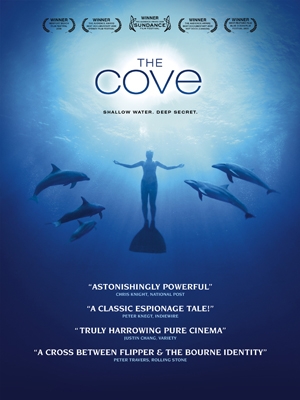
Well, glad to back at this after a long time...let's continue on from where I previously left!
Now, some whale hunting countries in '30's argued in a same manner in support of whaling.
Then bingo!! ... the number of whales dropped significantly due to joyous over-hunt .And IWC,formed after WWII with 17 whaling nations - had to start regulating the hunt in 1960's, and finally had to stop commercial whaling in 1982 . The moratorium is still in place despite countries like Japan,Norway are trying their best to lift it.
This is an example of how quickly their number can decline under rapid hunting-if allowed.See the graph for Minke whale hunts .. The maroon bars are historical whaling hunts and the blue line is an estimate of former blue whale abundance.
Who will be held responsible if history repeats itself,now in case of Bottlenose dolphins ?
This "Exploit-until-they-are-gone" policy is truly unscientific.
Moreover,being itself a predatory class oceanic-mammal ( just as whales,as shown in above example) - it can never replenish it's populace as fast as other "prey" species (I will come back to this point later).
And mind you,the hunt for one species may also affect another seemingly unrelated species
This following article speaks of how killing of whales affected seals,sea-lions,urchins and otters -the whole ecology could be on stake here...here's some quotes from that article
The killing of whales caused a collapse in the food chain, the scientists believe. As a half-million whales were wiped out by Japanese and Russian whaling fleets after World War II...
..."Food webs are way more complicated than that, and when you take a species out ... it's going to have effects on a number of different things, many of which are impossible to imagine,"
Clearly we need to do more research for how decline in dolphin hunt will affect our environment before we allow it . Although the ban on whaling is in place, Japan continues it's scientific Whaling and the numbers hunted are rising - clear from the diagram from the middle of the page!
I can not fathom how deep it may impact if it is allowed totally unregulated-and same applies for dolphins too...and more so 'cause Japan's dolphin hunt industry has no international regulation imposed upon them!
full article here
I believe no dolphin enjoys captivity - but atleast it is better than getting killed.But we have to understand that actually, it is the live-capture industry that promotes, mostly indirectly,the dolphin hunts.Although the aquariums,as expected from them , deny this. Instead SeaWorld’s (largest aquarium chain in US) PR machine claims that SeaWorld supports wildlife conservation, research, education, and has rescued thousands of stranded and sick animals .
What they don’t mention however that since 1986, 22 killer whales have died at SeaWorld ( according to the Marine Mammal Inventory Report) - and environmentalists suspects stress related factors,and negligence has something to play here,and I have no reason to believe dolphins are treated any differently in these facilities .
Ric O’Barry has a different take of their MO, based on his years of experience fighting sea mammal hunting and capture in Japan
Bon Voyage fellow travellers...until we met again!
- Another argument by pro-hunters is that Bottlenose Dolphins, the species primarily being hunted in Japan is not "Endangered" ... yet ! So,they can be exploited without any precautions whatsoever.
Now, some whale hunting countries in '30's argued in a same manner in support of whaling.
Then bingo!! ... the number of whales dropped significantly due to joyous over-hunt .And IWC,formed after WWII with 17 whaling nations - had to start regulating the hunt in 1960's, and finally had to stop commercial whaling in 1982 . The moratorium is still in place despite countries like Japan,Norway are trying their best to lift it.
This is an example of how quickly their number can decline under rapid hunting-if allowed.See the graph for Minke whale hunts .. The maroon bars are historical whaling hunts and the blue line is an estimate of former blue whale abundance.
Who will be held responsible if history repeats itself,now in case of Bottlenose dolphins ?
This "Exploit-until-they-are-gone" policy is truly unscientific.
Moreover,being itself a predatory class oceanic-mammal ( just as whales,as shown in above example) - it can never replenish it's populace as fast as other "prey" species (I will come back to this point later).
And mind you,the hunt for one species may also affect another seemingly unrelated species
This following article speaks of how killing of whales affected seals,sea-lions,urchins and otters -the whole ecology could be on stake here...here's some quotes from that article
The killing of whales caused a collapse in the food chain, the scientists believe. As a half-million whales were wiped out by Japanese and Russian whaling fleets after World War II...
..."Food webs are way more complicated than that, and when you take a species out ... it's going to have effects on a number of different things, many of which are impossible to imagine,"
Clearly we need to do more research for how decline in dolphin hunt will affect our environment before we allow it . Although the ban on whaling is in place, Japan continues it's scientific Whaling and the numbers hunted are rising - clear from the diagram from the middle of the page!
I can not fathom how deep it may impact if it is allowed totally unregulated-and same applies for dolphins too...and more so 'cause Japan's dolphin hunt industry has no international regulation imposed upon them!
- Some argues that hunting should be transformed into capture industry ,as Dolphin's enjoy human companionship - and it is better to capture and sell them to aquariums rather than killing them..
"Even more unsubstantiated is the assertion, which can be found in the marketing materials of many captive facilities, that the dolphins actually enjoy life in confinement, as if, somehow, millions of years of evolution and specific adaptation to life in the seas can be overcome after a single or even several generations...captive-bred dolphins are not domesticated and have the same inherent needs as wild-born animals"
full article here
I believe no dolphin enjoys captivity - but atleast it is better than getting killed.But we have to understand that actually, it is the live-capture industry that promotes, mostly indirectly,the dolphin hunts.Although the aquariums,as expected from them , deny this. Instead SeaWorld’s (largest aquarium chain in US) PR machine claims that SeaWorld supports wildlife conservation, research, education, and has rescued thousands of stranded and sick animals .
What they don’t mention however that since 1986, 22 killer whales have died at SeaWorld ( according to the Marine Mammal Inventory Report) - and environmentalists suspects stress related factors,and negligence has something to play here,and I have no reason to believe dolphins are treated any differently in these facilities .
Ric O’Barry has a different take of their MO, based on his years of experience fighting sea mammal hunting and capture in Japan
“SeaWorld claims that if we display the dolphins, people will be sensitized to them, and then they’ll be there for the dolphins. But look at Japan to see the smoking gun. The country of Japan is the size of the state of California. There are fifty dolphinariums in Japan, yet the largest slaughter in the world is happening in Japan. No one from the dolphinariums, or their 100 million customers a year, are in Taiji trying to stop the dolphin slaughter. There is no connection between dolphin shows and conservation - It’s just a big lie."
---To Be Continued....
Bon Voyage fellow travellers...until we met again!